
Travel split bills are here: organize lodging, transport, and meals on a timeline
Paji Splitly travel mode puts shared trip expenses on one timeline: flights before the trip, lodging and meals during it, and card fees after all settle into place, plus trip stops, pending amounts, and multi-currency settlement.
Travel split bills are more than splitting dinner evenly
A group trip bill usually starts before everyone gets home and opens a calculator. Lodging may be paid before departure, a car rental deposit may happen on day one, and tickets, meals, and souvenirs keep appearing along the itinerary. At the end, the group is not only sorting a list of amounts. Everyone needs to understand when each expense happened, who paid first, and how the final settlement should work.
That is what travel mode in Paji Splitly is for. When creating a bill, choose travel mode, set the trip dates, and place expenses onto a timeline. Expenses added during the trip, amounts filled in later, and final settlement all stay in the same shared bill.
Use a timeline for expenses that happen day by day
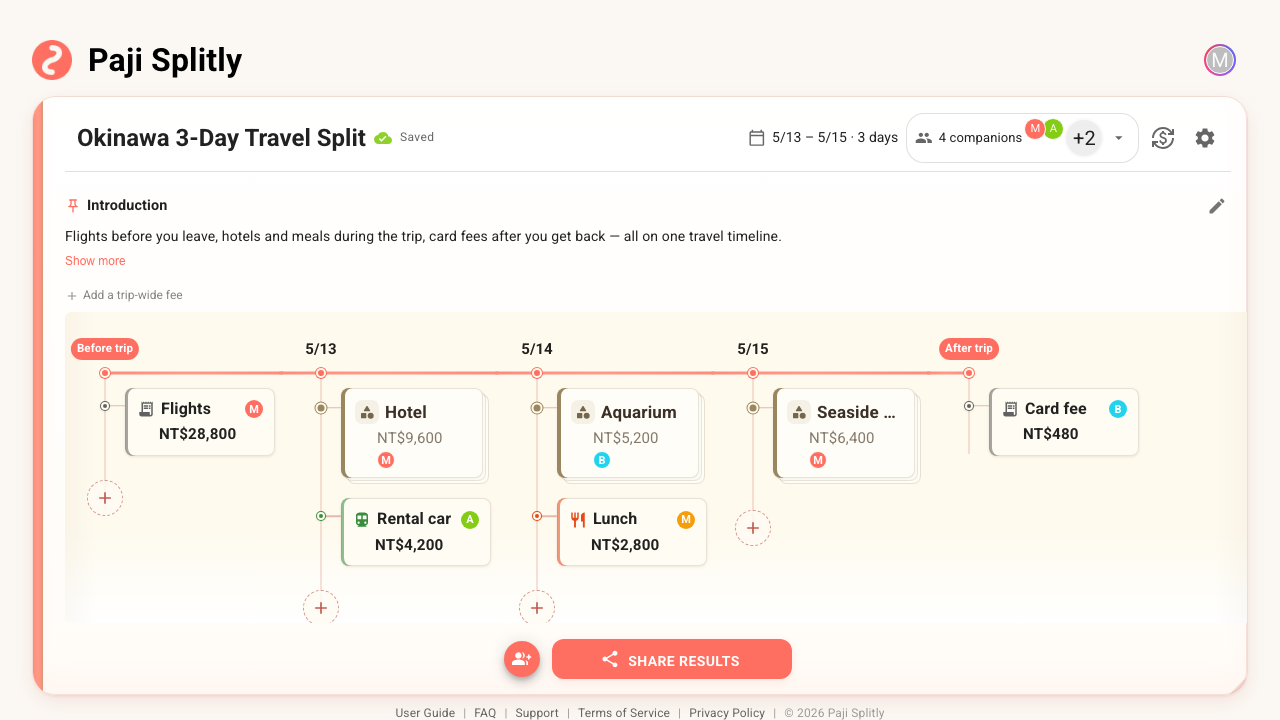
A regular expense list works well for dinners or short events, but trips often need to be reviewed by day. Travel mode places expenses on a timeline, so Day 1 transport, Day 2 tickets, and Day 3 dinner naturally appear where they belong. The organizer does not have to guess which day each item came from in one long list.
Pre-trip and post-trip costs get their own segments
A trip's expenses rarely all land within those few days. Flights booked before departure, a hotel deposit, or a refund and card fee that show up after you get home would stretch the main timeline if they were forced into the trip's daily columns.
Travel mode handles this: once you set the trip start and end dates, those costs gather into a "before trip" and "after trip" segment at each end of the timeline. Pre-departure spending collects on the left under "before trip", post-trip charges collect on the right under "after trip", and the daily columns in between still show only what happened during the trip itself.
The flights everyone paid for up front, for example, do not have to be forced onto day one — they sit clearly under "before trip", while a card fee charged after you return lands under "after trip". Expenses without a date start in "before trip"; once dates are added, or when you edit them later, each one moves to the segment it belongs to. The bill can stay flexible while the trip is still being organized.
Trip stops keep related costs together
Many trip expenses belong to the same stop: breakfast near the hotel, museum tickets, dinner and service charges, or transport around one attraction. Travel mode can group related costs under a trip stop on the same day, making the bill closer to how people remember the trip.
The goal is not to turn the trip into a diary. The goal is easier review. When someone asks "how was that dinner split?" or "which ride was this fare for?", the expense is already under the right day and stop instead of buried in chat messages.
Pending amounts let you save the place first
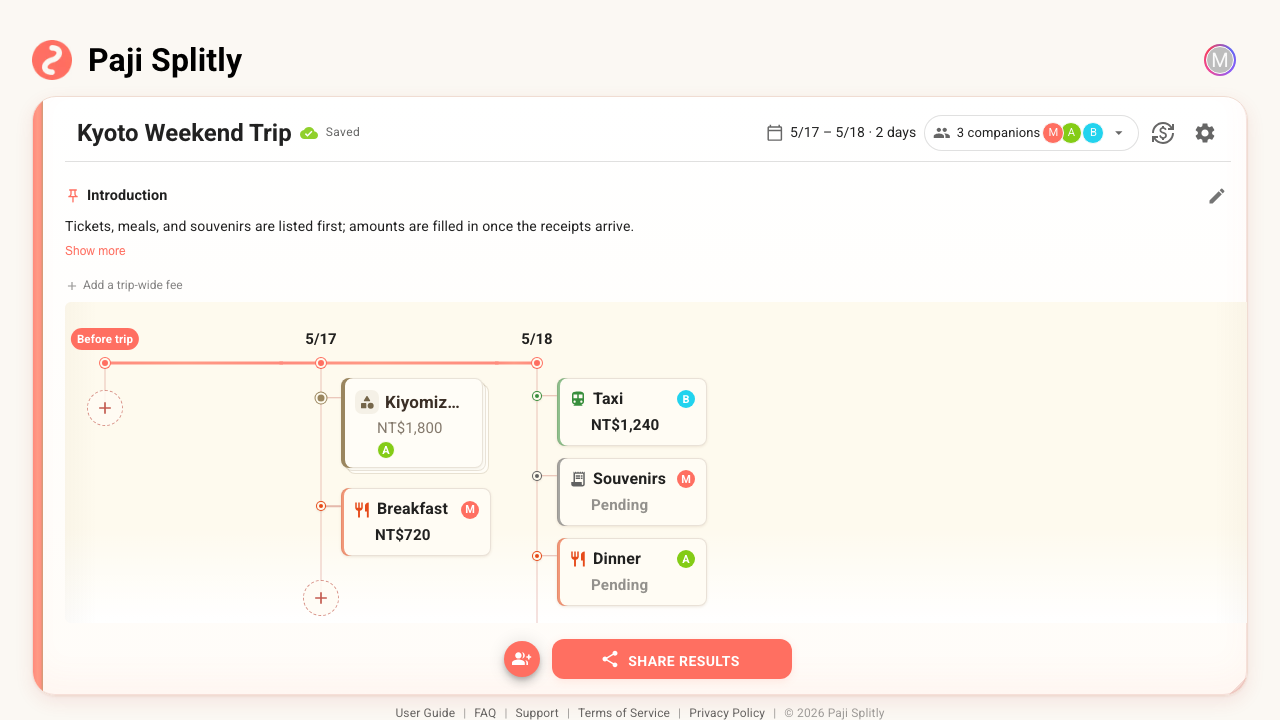
During a trip, some costs are known before the final amount is available. A restaurant bill may still need to be split, a friend may send a ticket receipt later, or souvenirs may need to be counted. Pending amounts let you record that the expense exists before the number is ready.
Pending amounts stay in the expense list, but they do not enter settlement yet. Once the amount is filled in, settlement updates with the new data. This lets the group build the bill as the trip happens instead of waiting for every receipt.
Keep original currencies, then settle with bill-level rates
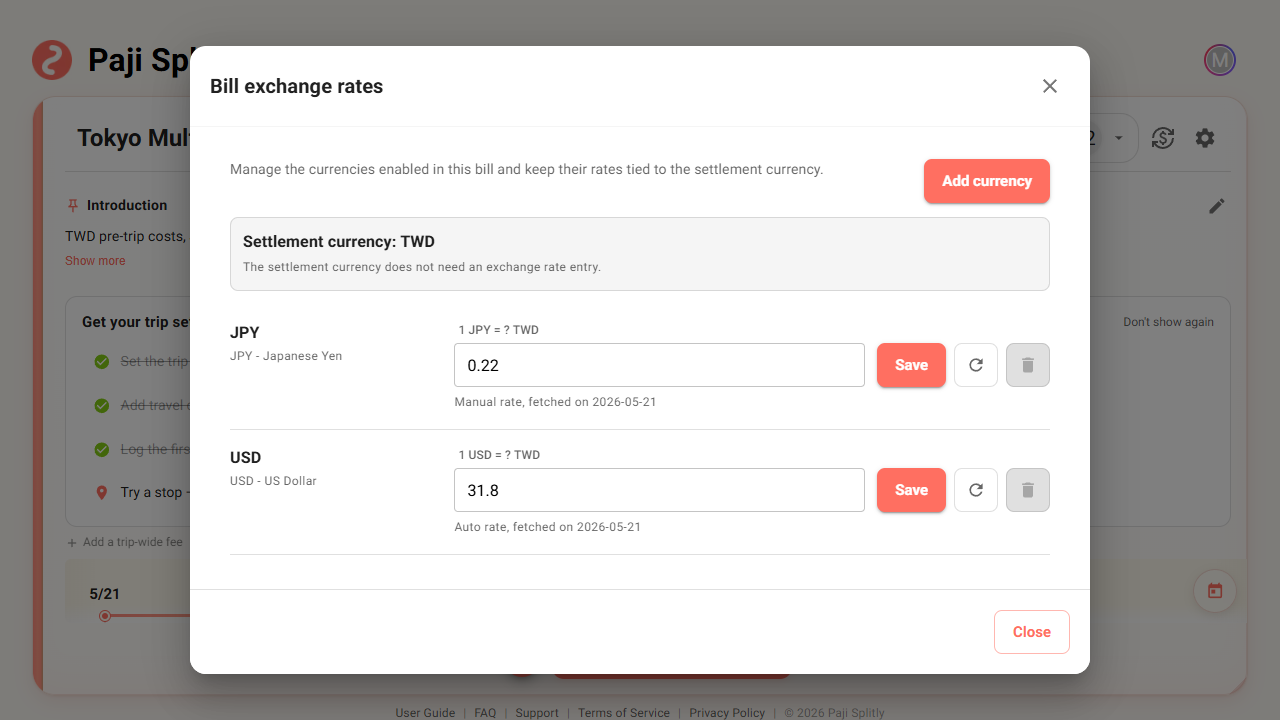
International trips often mix currencies. One person may pay transport in TWD before departure, a booking site may charge USD, and meals may be paid in JPY or KRW on location. Travel mode works with multi-currency expenses, so each expense can keep its original currency while the bill converts everything to the settlement currency.
Rates are saved with the bill instead of scattered through chat notes. You can review the currencies used in the bill, adjust rates manually, or refresh rates when needed. This is not a currency exchange tool. It gives one trip a consistent basis for settlement.
Shared pages keep the trip context
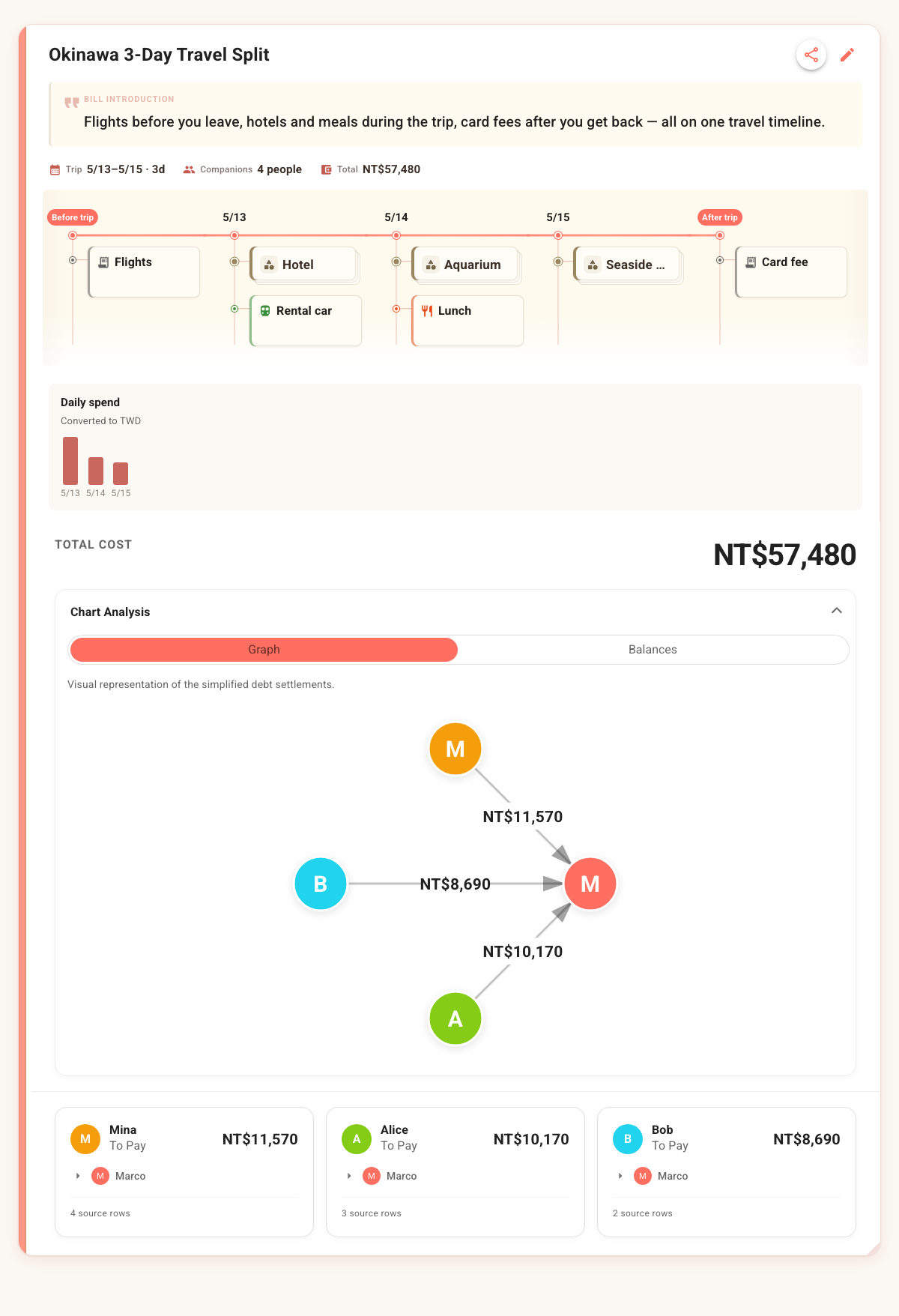
The travel bill sharing page does more than show who should pay whom. It keeps the trip overview, timeline, daily expenses, and settlement result together, so everyone can review the same information. For the organizer, that is easier than rebuilding a spreadsheet. For companions, it is easier to understand where the final numbers came from.
For a single dinner, a regular split bill may be enough. Travel mode is for longer, more scattered, easier-to-miss expenses: multi-day itineraries, multiple payers, multiple currencies, and items that are recorded first and completed later.
Who this update helps
- Group trip organizers who need to track lodging, transport, meals, and tickets while traveling.
- Travelers who already paid for flights or a hotel deposit before departure and want those costs in the same bill as the trip itself, settled together at the end.
- Travel companions who each paid for different items and want fewer settlement questions later.
- Overseas trips that include TWD, JPY, USD, or other currencies in the same bill.
- Itineraries where some amounts are not final yet, but the group still wants to start recording expenses.
The goal of travel mode is simple: keep shared trip expenses connected to the trip context, then return everything to one bill the group can understand. Less pressure during the trip, and fewer "what was this expense?" questions after coming home.