
Little Note is more than a memo: use Paji Splitly to agree on the split first
Practical ways to use Paji Splitly's Little Note: meal rules, payment reminders, receipt links, and trip details stay with the bill instead of getting buried in chat.
Use Little Note for context that should not disappear in chat
The hardest part of splitting a bill is often not the math.
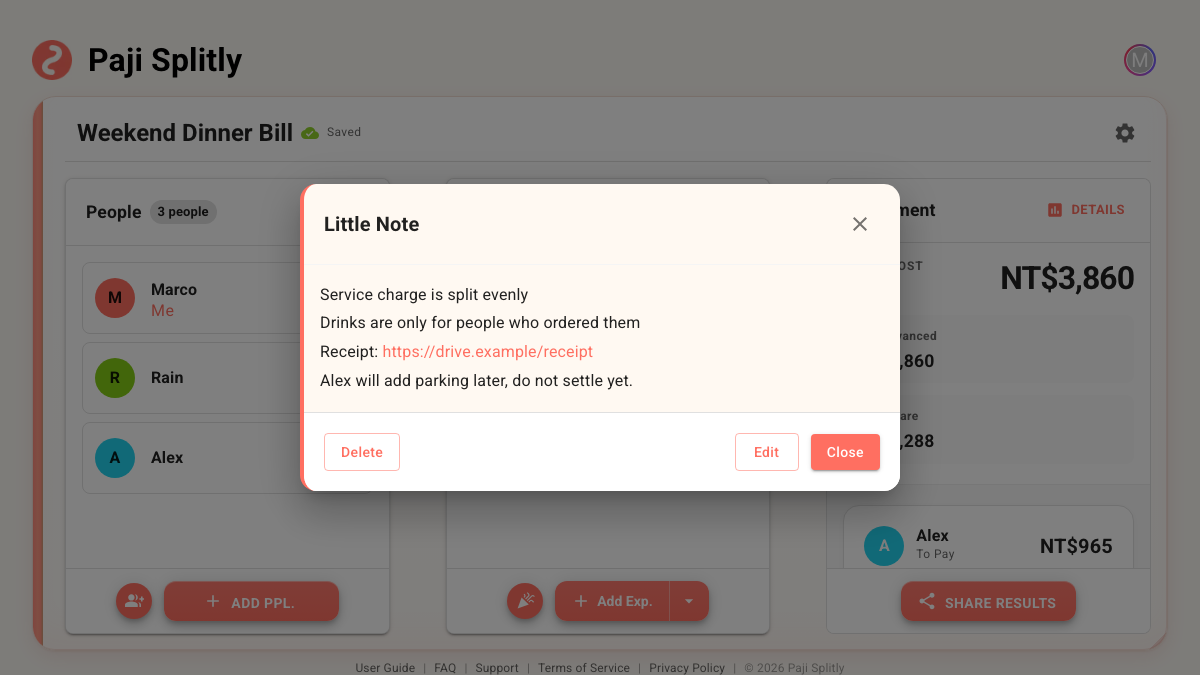
It is the assumptions around the math: the service charge is shared by everyone, drinks are only for the people who ordered them, one person only joined dessert, or the receipt link will be added later.
By the time the group is ready to settle, those details may be buried under photos, stickers, and planning messages.
Paji Splitly's Little Note gives those details one place to live.
It does not replace expenses, and it does not change the settlement formula by itself. It is for the context everyone should be able to read beside the same shared bill. When someone comes back later and asks, "What did we agree on?", the answer is already there.
Write the split rules first so there is less to debate later
Many shared expenses have special rules from the start. The group just forgets to write them down.
For a dinner bill, the Little Note can say:
- Service charge is split evenly.
- Drinks are only split among people who ordered them.
- Kids do not share the main dishes, only drinks.
- The organizer pays by card first, then everyone transfers after settlement.
Not every sentence needs to become a complex rule.
Some details only need to be visible enough that everyone remembers the same agreement. Because the Little Note stays inside the bill, it stays next to the members, expenses, and settlement result. If the final amount looks strange, the group can read the note first before changing expenses or split rules.
Keep receipts, transfer details, and payment reminders beside the bill
Little Note is also useful for money-related information that should not become an expense row.
For example:
- A receipt link or booking confirmation link.
- The organizer's transfer account or payment memo.
- Parking is not included yet and will be added when the receipt arrives.
- Someone paid a deposit first, and the bill should be updated after the refund.
If the note contains a URL, it can be opened directly from the note view.
That makes Little Note feel like a sticky note beside the bill. It does not calculate anything, but it explains what still matters around the bill. Fewer scattered reminders means fewer questions when it is time to settle.
Travel mode: use the trip intro for bigger trip context
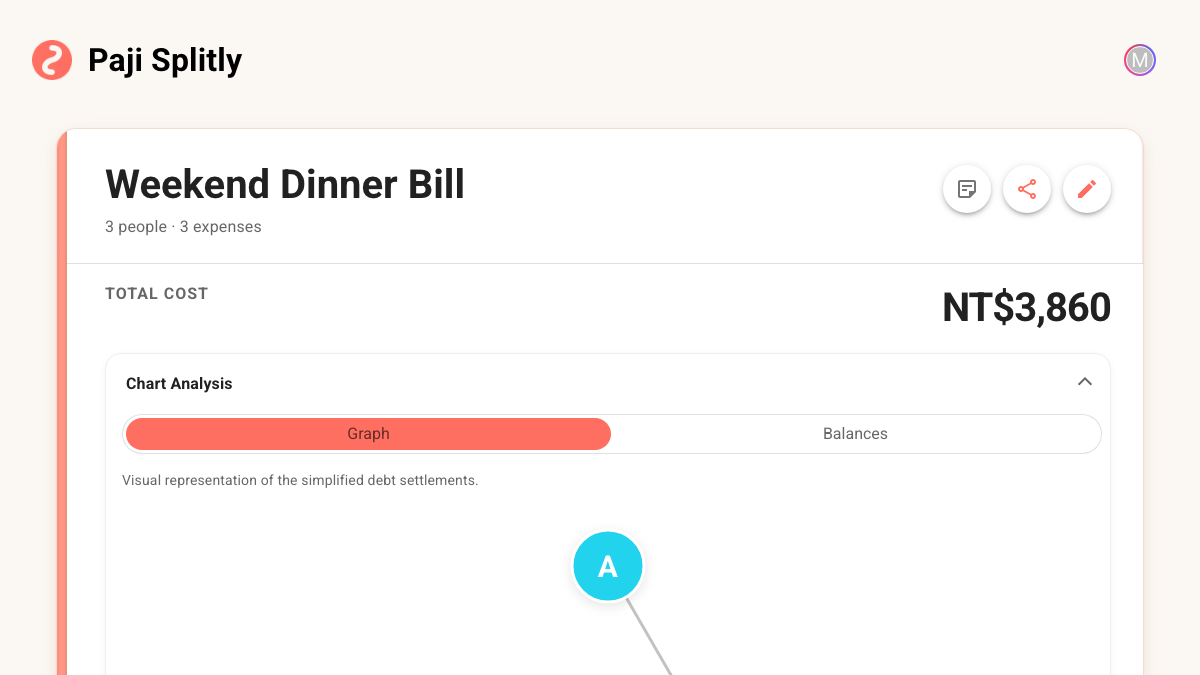
If you are using Travel mode, there is another place that can work even better for top-level context: the trip intro.
The trip intro can hold trip-wide rules and reminders, such as:
- Lodging and rental cars settle in TWD, while local meals are recorded in JPY.
- Pre-trip card payments stay before the trip, and post-trip card fees are added after the trip.
- Everyone spends three minutes each night adding that day's expenses.
This is better than a general note when the information explains the whole trip. It appears with the trip context, so companions can understand the bill as soon as they open it.
Little Note can stay focused on smaller reminders: a receipt link, a transfer reminder, or a one-off payment agreement.
The simple rule is this: if it changes how people understand the whole trip, write it in the trip intro. If it is a short reminder beside the bill, use Little Note.
Read the note once before settlement
Little Note is most useful right before settlement.
When expenses have been added in a hurry, or a trip bill has been built during the trip, take a minute to check the note or trip intro:
- Did someone say an expense would be added later?
- Is there a receipt link that still needs to be opened?
- Is there a person who should not join one specific expense?
- Are service charges, card fees, deposits, or refunds already clear?
This does not need to become a formal review. It just makes the final conversation easier.
Many split-bill arguments are not caused by wrong math. They happen because people are using different assumptions. Put the assumptions inside the bill, and the group has a better chance of settling from the same page.
Summary: write the rule down before explaining it later
Little Note is not for replacing the expense list, and it is not for secretly changing settlement.
Its value is simpler: write down how the bill should be understood, what still needs to be added, and what everyone should remember before sending money.
A good split-bill tool should reduce friction, not turn the group into accountants. Paji Splitly's Little Note helps by keeping loose context attached to the bill where it belongs.