
What is Paji Splitly? Spend less time doing the math for trips, dinners, and shared rent
A friendly look at how Paji Splitly keeps shared expenses, travel timelines, pending amounts, currencies, and fees in one readable bill.
Put everyone's money back into one shared bill
Paji Splitly is a tool for keeping shared expenses in one place.
Trips, dinners, shared rent, group purchases, event supplies... they all get messy in similar ways. Someone pays first. Someone only joins a few items. Someone does not have cash on hand, so another person covers them.
Add enough of those little exceptions together, and suddenly nobody is quite sure who should pay whom.
That is usually when someone says, "It's fine, it is not that much. I'll just cover the extra."
But it does not have to end that way.
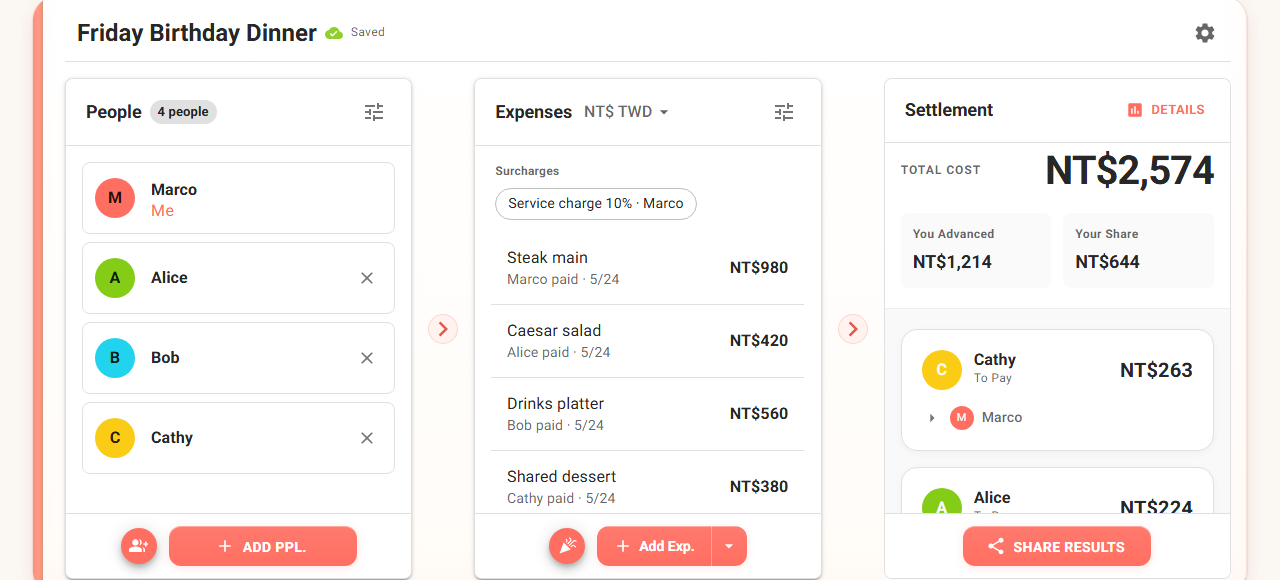
With Paji Splitly, you can create one shared bill, send the link to the group, and let everyone record expenses in the same place. When it is time to settle up, Paji Splitly turns those entries into a result everyone can understand: who should pay whom, and how much.
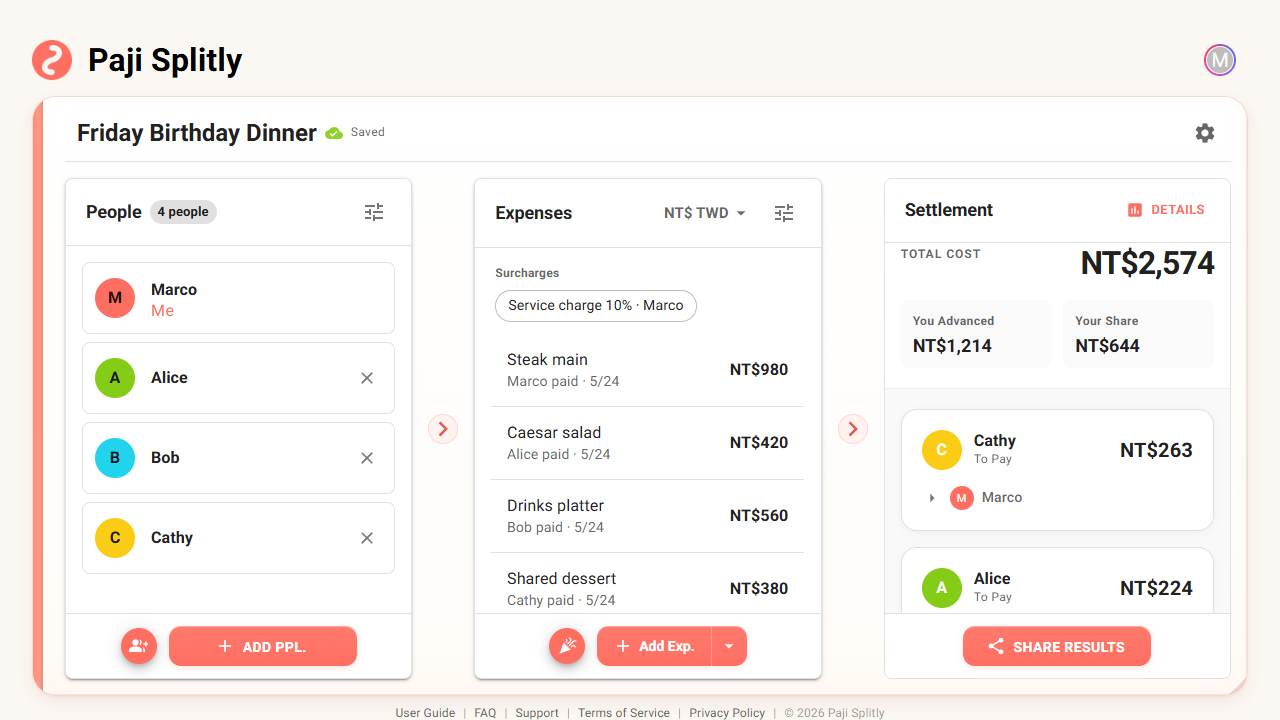
From simple reimbursements to messy shared costs
The basic flow is simple:
- Add members
- Add expenses
- Check the settlement result
Most shared bills can start there.
Each expense can have its own payer, participants, and split method. It can be split equally, paid by one person only, used to cover someone else, or adjusted to match whatever your group agreed on.
That makes Paji Splitly useful for everyday situations like:
- A dinner where one person pays by card, but service charges or drinks are not split the same way.
- Shared rent or household shopping where some items are shared and others belong to only a few people.
- Group events where several people pay upfront and nobody wants to reconcile everything through chat.
- Trips where lodging, transport, meals, and tickets are scattered across different payers.
If your group's math is a little unusual, you can set a custom split instead of trying to explain it later.
The settlement page pulls everything together: total spending, how much each person already paid, how much each person should cover, and the final payment directions.
Travel mode turns a multi-day trip into a timeline
One feature worth calling out is Travel mode.
Travel expenses get confusing because they do not happen all at once. They build up day by day, along with the actual trip.
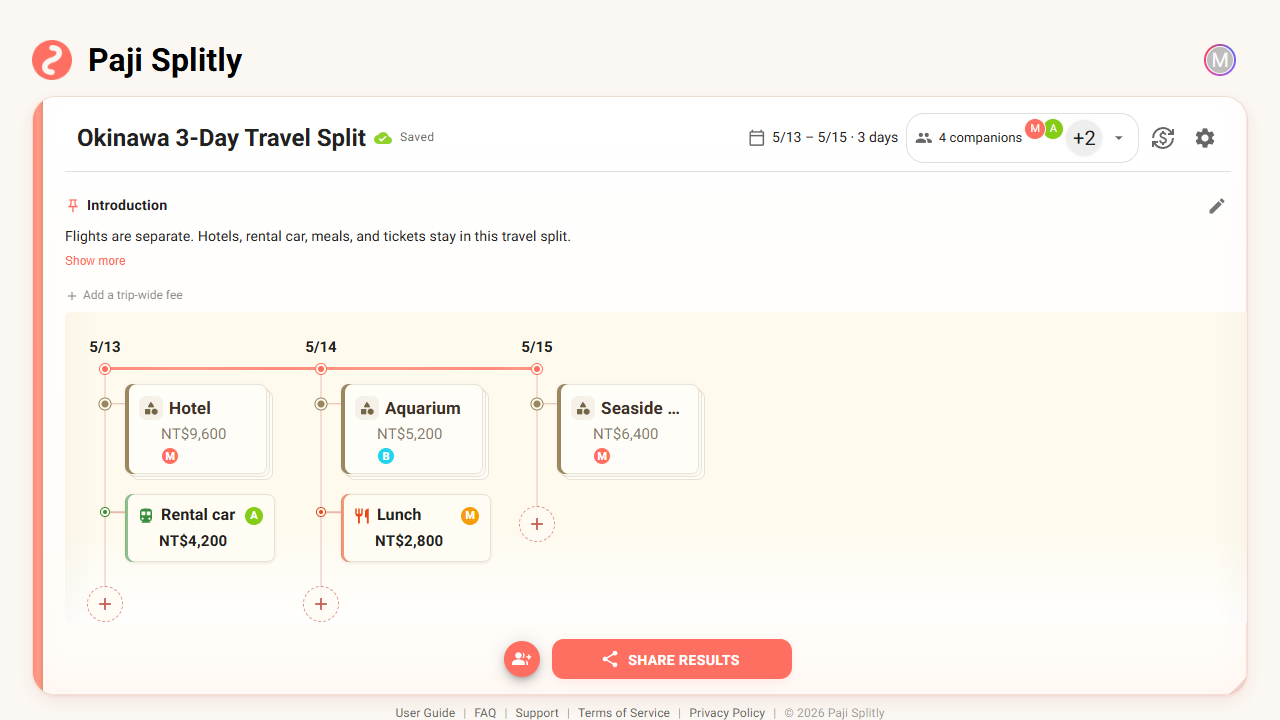
Paji Splitly's Travel mode puts expenses onto a timeline, so lodging, rental cars, tickets, and meals can be organized by date. You can also create trip stops, then keep expenses for a specific attraction, restaurant, or stay under that stop.
It fits group travel nicely: set the trip dates, add companions, then place each expense where it belongs. Later, when you check the bill, it reads more like the trip you actually took.
Unknown amounts can still be recorded first
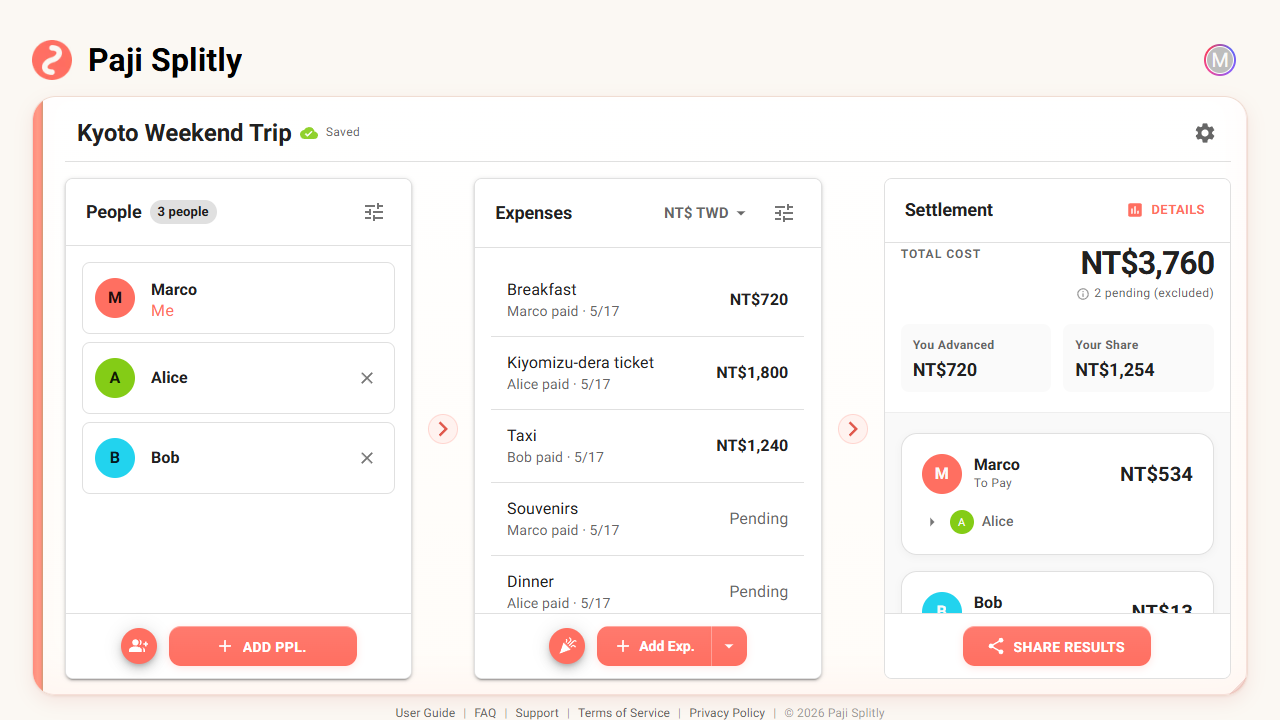
Sometimes you know an expense is coming, but you do not know the amount yet. Maybe the group is going to a certain attraction, but the ticket price is still unknown. In that case, you can add the expense first and leave the amount blank.
That gives the item a place in the bill, so it is less likely to be forgotten later.
Pending amounts do not enter the settlement total yet, and the settlement view reminds you when something still needs an amount. It lets the bill stay organized during the trip instead of waiting until every detail is complete.
Overseas trips can still settle in one currency
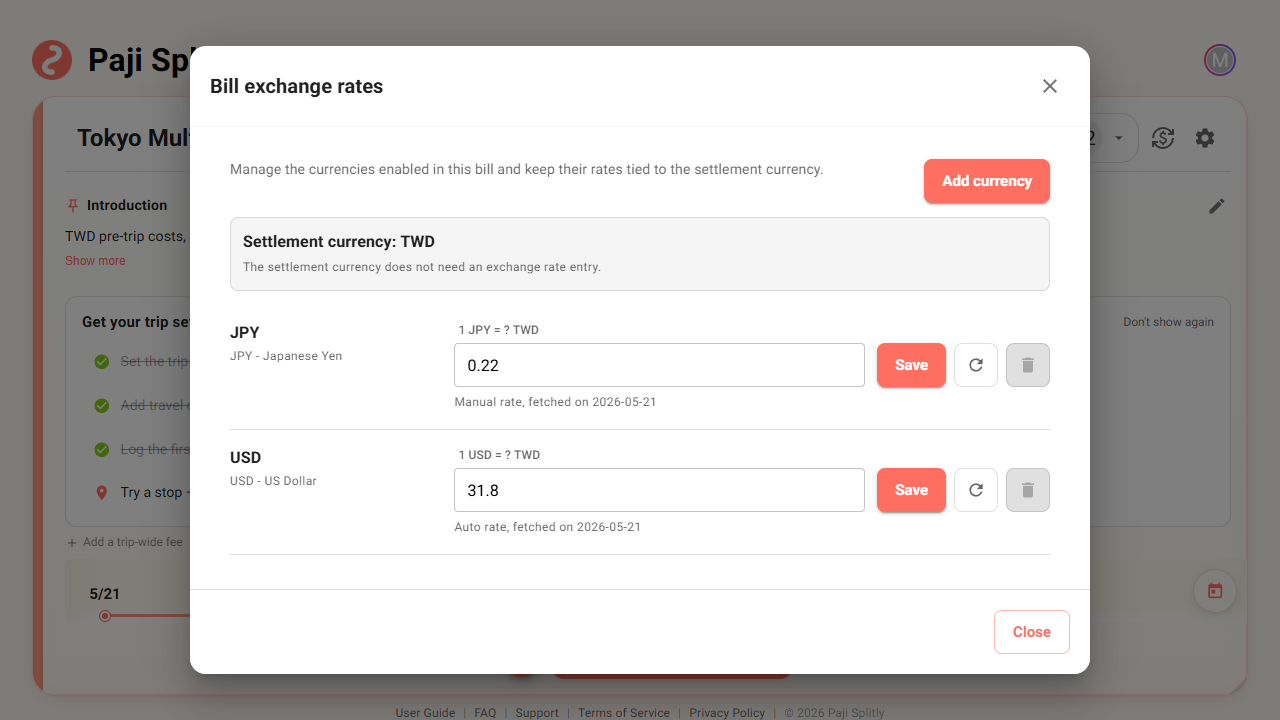
International trips often mix currencies: TWD paid before departure, JPY cash on location, or USD charged by a booking site. Paji Splitly can keep those expenses in one shared bill and convert them back to the settlement currency with bill-level exchange rates.
Besides using refreshed rates, you can also set the rate you want the bill to use. That matters for group travel because everyone can agree on the exchange rate before settling, instead of arguing about it at the end.
Dinners and events can handle fees separately
Many split-bill tools handle simple averages well, but real bills often include extra fees: service charges, tips, card fees, venue fees, and other costs that do not belong to one single item.
Paji Splitly supports those as separate surcharges, and they can have their own split rules too.
That keeps the bill closer to real life. You do not have to hide a service charge inside a fake food item or explain it in a note, because it belongs to the bill as its own cost.
The goal: make shared expenses easier to explain
Paji Splitly is not only for the easiest case, where one meal is split evenly by everyone. It is especially useful for the shared expenses that make people hesitate: someone paid first, someone arrived late, someone only joined part of the meal, someone paid in another currency, or someone is still waiting for a receipt.
A good split-bill tool should reduce friction, not turn the group into accountants. Paji Splitly keeps shared expenses together, preserves the story behind each amount, and turns the result into payment directions the group can understand.